The Miao Kings of Tantou 湖南滩头的苗王
Here’s a pair of prints from Tantou in Hunan province (滩头镇). The figures look like local versions of the familiar China-wide door gods Qin Qiong and Yuchi Gong, but labels identify them as 苗王, kings of the Miao ethnic minority. As the Miao don’t have kings, and have often been at war with the wider Chinese population, why is anyone making deity prints of them?
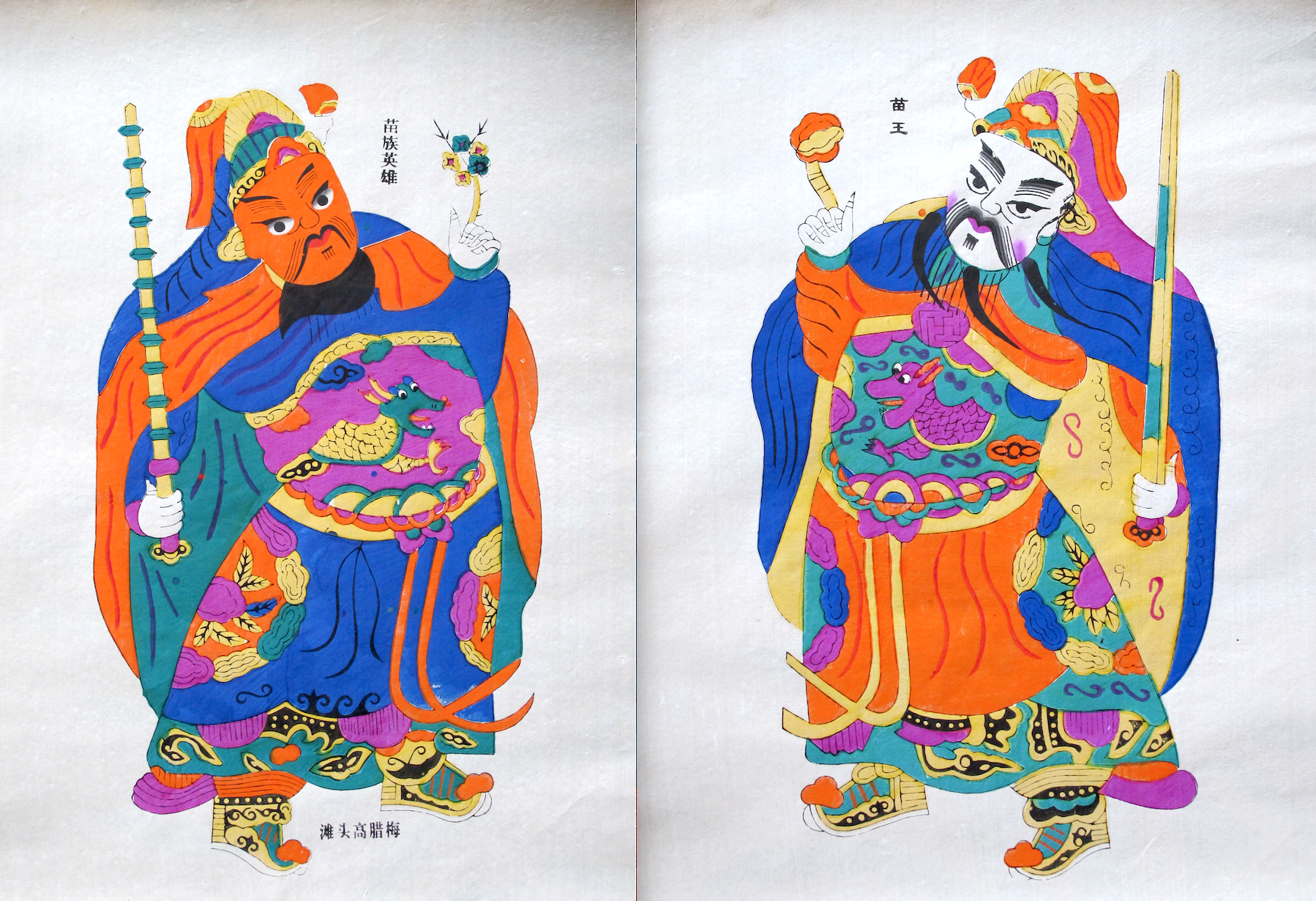
Miao Hero, Miao King
Tantou lies 200km southwest of Hunan’s capital Changsha, a forty-minute bus ride from the nearest railhead at Longhui (隆回). It’s a small functional country town of concrete, brick and tile buildings, the single main street lined with shops selling daily necessities and full of hard-working rural folk – women with armfulls of groceries and men buying village-made farm tools.
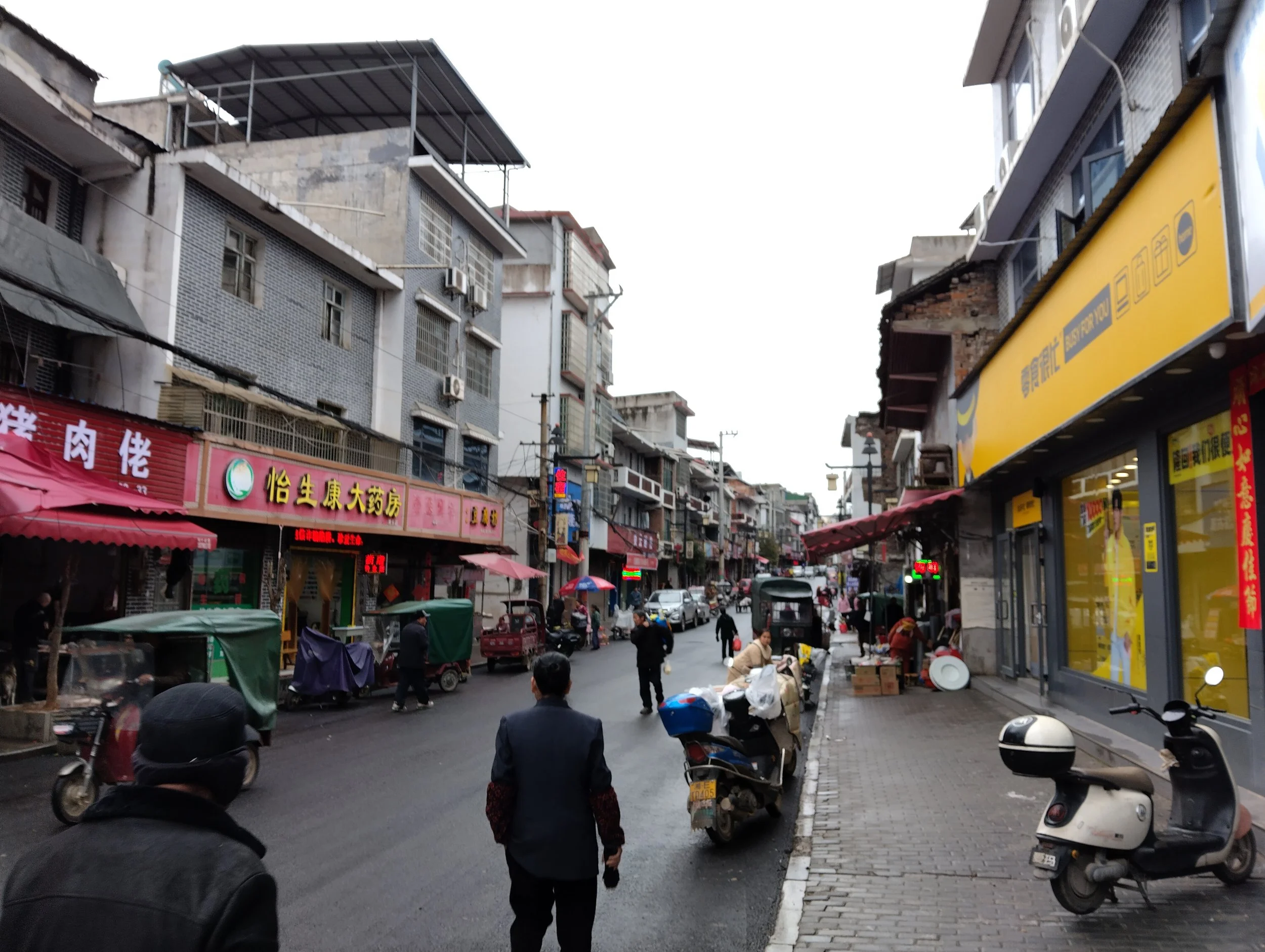
Tantou’s single main street, looking south. Gaolamei was signposted down an alley off to the left, Fumeixiang down another off to the right
Tantou’s woodblock industry is said to date back over three centuries and by 1900 the town hosted 100 studios pumping out millions of prints every year, marketed all over southwestern China and into neighbouring countries. There are now just two workshops, Gaolamei (高腊梅) and Fumeixiang (福美祥) – as far as I can tell, the last in all Hunan province.
Gaolamei is the longest established, known as Chengrenfa (成人發) until the owner renamed it after his wife during the 1950s. Fumeixiang was founded in 2015 by former Gaolamei apprentice Ms Yin Dongxiang (尹冬香), keen to carry on the tradition after many of the older generation of printers had passed away.
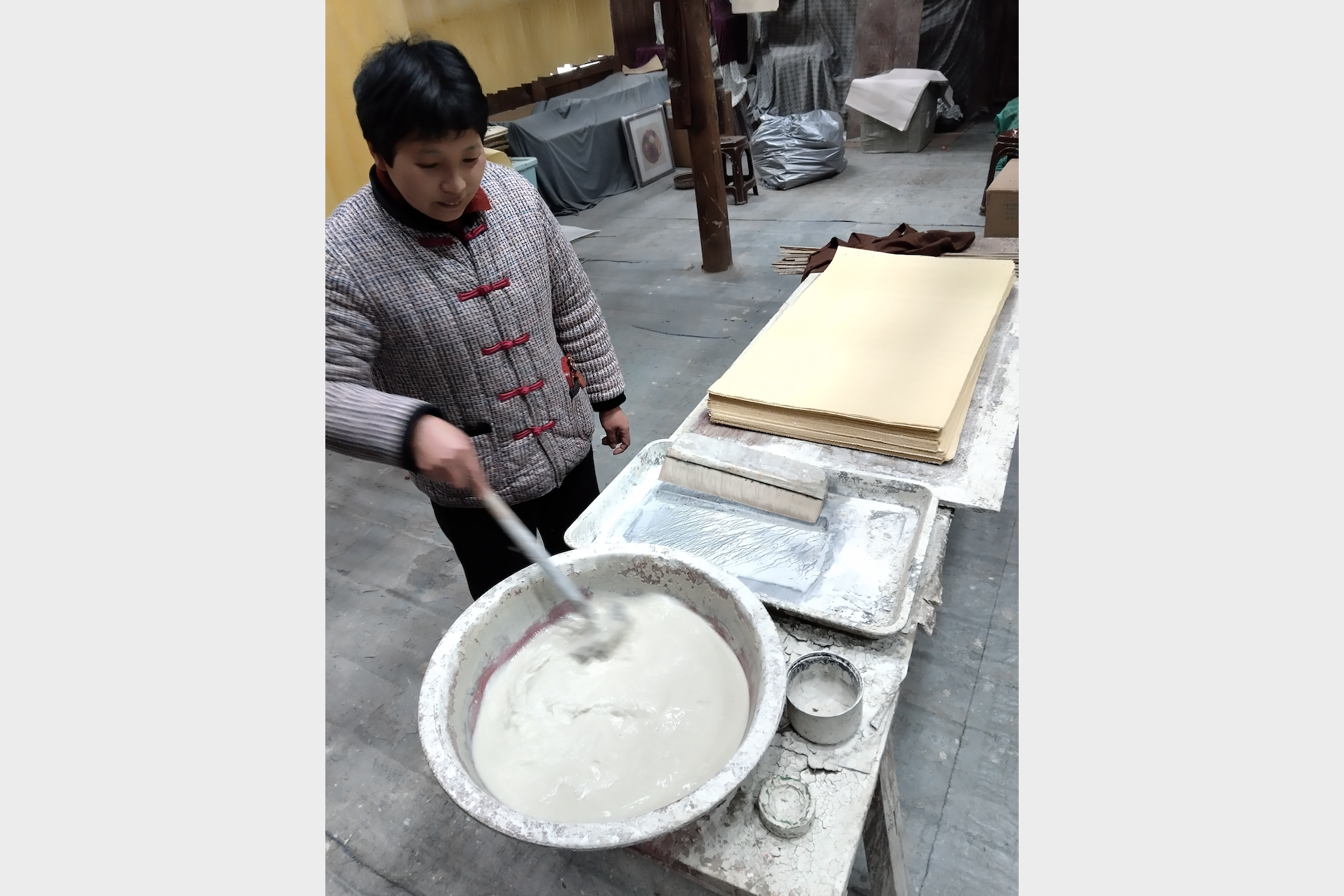
Yin Dongxiang of Fumeixiang workshop sizing paper with tianying stone wash
Given that Gaolamei and Fumeixiang share the same roots, it’s not surprising that both produce a similar stock of traditional images, using much the same methods. Paper is made locally from bamboo fibre; naturally fawn-coloured, it’s painted before use with a white slurry of chalky tianying stone (天应石). Seasoned, century-old pear wood is used for printing blocks – it cuts smoothly, wears slowly and doesn’t warp or split over time.
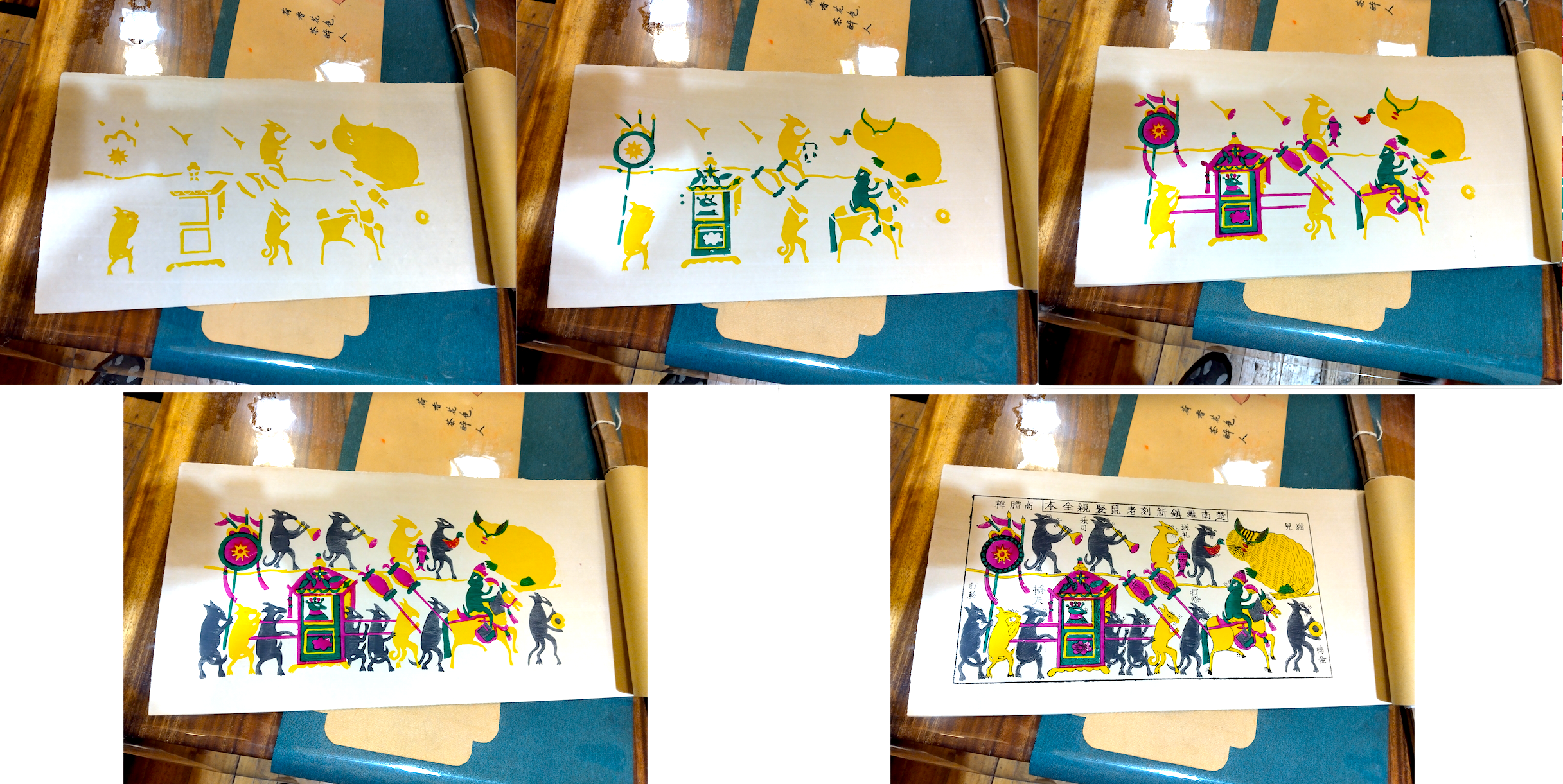
Colour printing sequence, with black outline last. Most of Tantou’s prints use the same colours, along with orange
Tantou’s inks are opaque so colours are printed first and the “master block” black outline actually added at the end; each colour must dry completely before the next is printed. Faces on gods are left blank: their hair and features are printed using a separate block and the eyes themselves dotted in with a brush, a process similar to the kaiguang ceremony used to “activate” wooden deity statues.
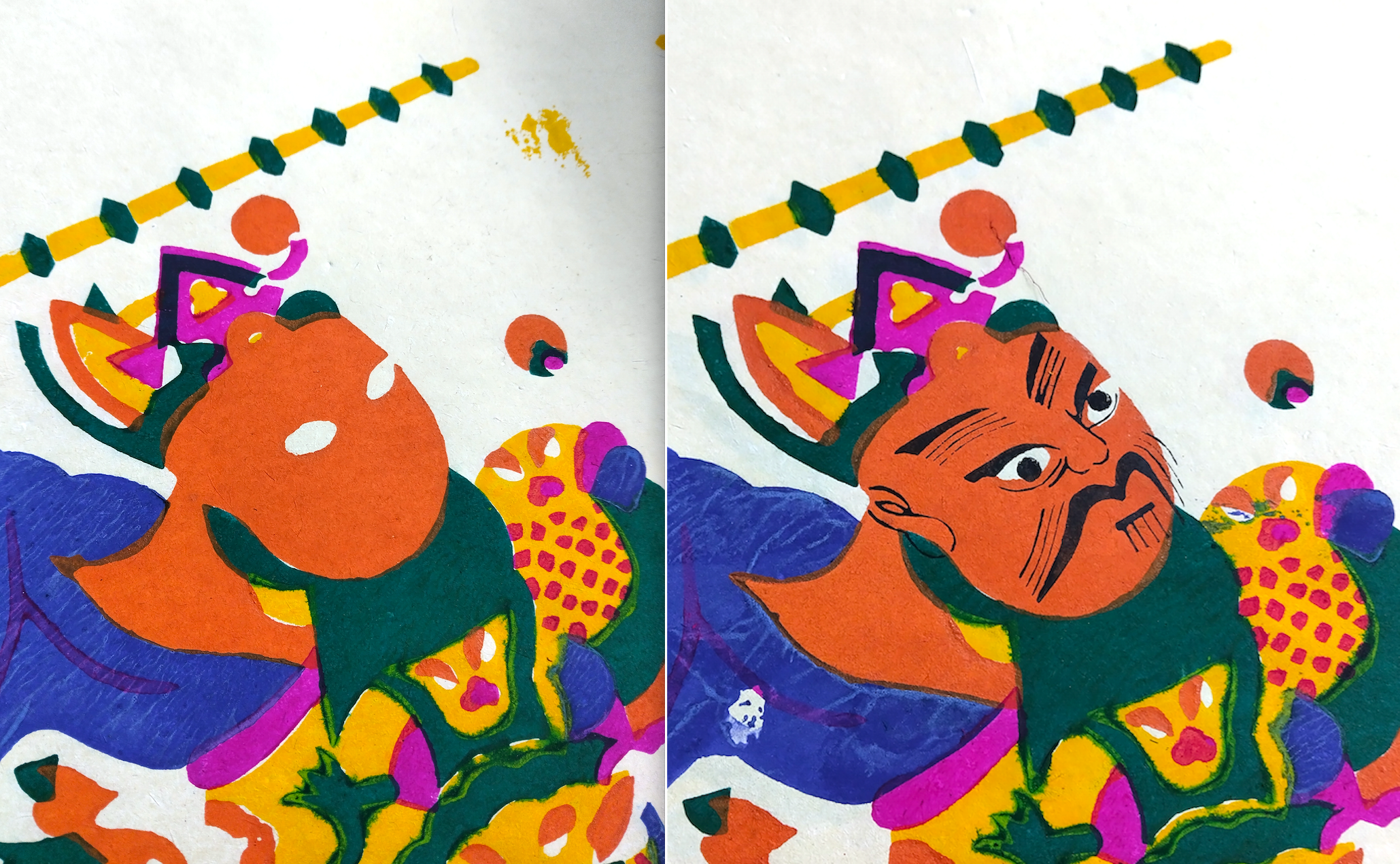
Before and after face printing an eye dotting
Tantou’s most famous design is “The Complete New Edition of The Rat's Wedding" (楚南灘鎮新刻老鼠娶親全本), their own take on a popular moral tale about an ambitious father rat wanting to marry his daughter into a powerful family. Convinced that a cat would make the most suitable groom, he arranges the betrothal with predictably tragic results. The lesson: aiming above your station invites disaster.
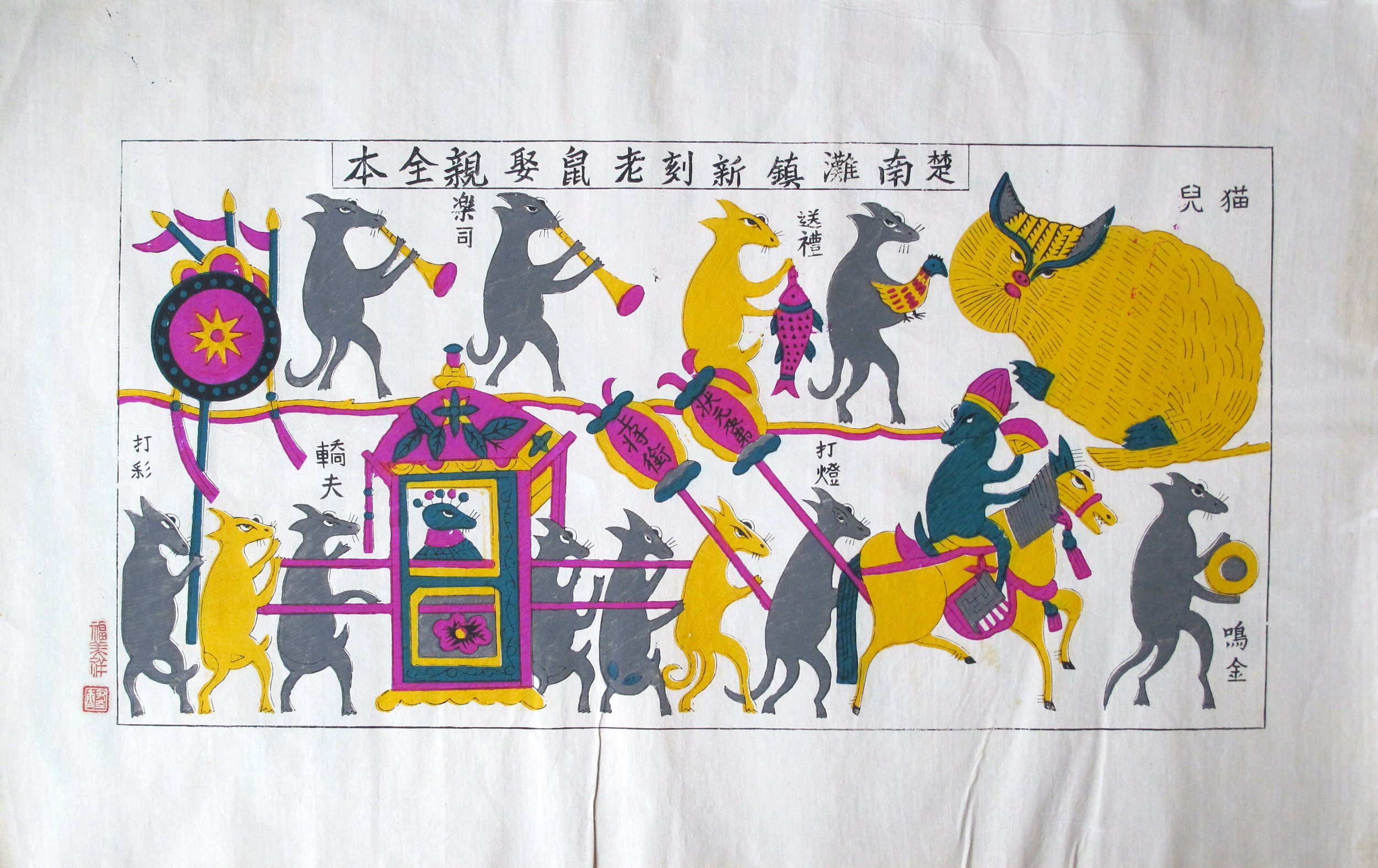
Rat Wedding, an extra large version by Fumeixiang. Bribed with food and music, the cat allows the wedding party to proceed uneaten. Meanwhile the rat groom – a top scholar according to banners being carried by his retainers – rides ahead of the bride inside her sedan chair.
Tantou’s version is subtly different, warning that getting entangled with the rich and powerful is possible but expensive. Here, instead of slaughtering the bridal party, a cat watches the rats’ wedding procession from the sidelines, having been bought off with gifts. Incidentally, there’s a version of this print from Dong Ho in Vietnam – evidence of how far afield Tantou’s prints were once traded.
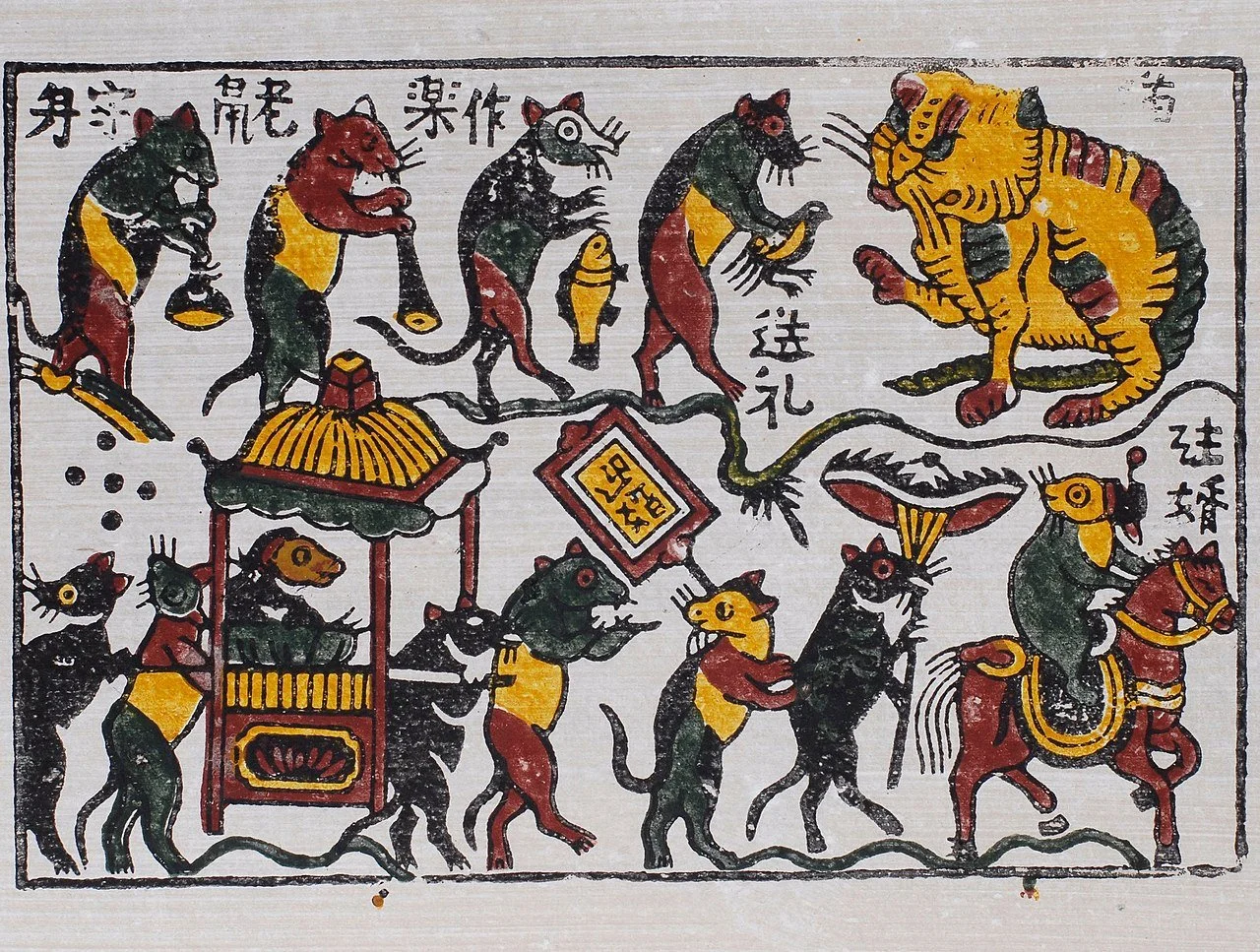
Rat Wedding, from Dong He in Vietnam
And so back to the Miao kings. The region north of Tantou is the birthplace of the Meishan folk religion (梅山教), now spread across southwestern China. This is an area rich in minority nationalities such as Miao, Tujia, Buyi and Yao, and Meishan blends their animistic beliefs with elements of Han Chinese Daoism and Buddhism.
Meishan’s main deity is the hunting god Zhang Wulang (張五郎), always shown doing a handstand. There are many explanations of how he became an “Inverted God” (倒立神). One says that he fell over a cliff wrestling with a tiger, only saved from hitting the rocks below whe he got caught upside down on a tree branch. Another verson tells how Zhang’s lover disguised him from her vengeful father’s magic by dabbing him in menstrual blood and teaching him to walk on his hands.
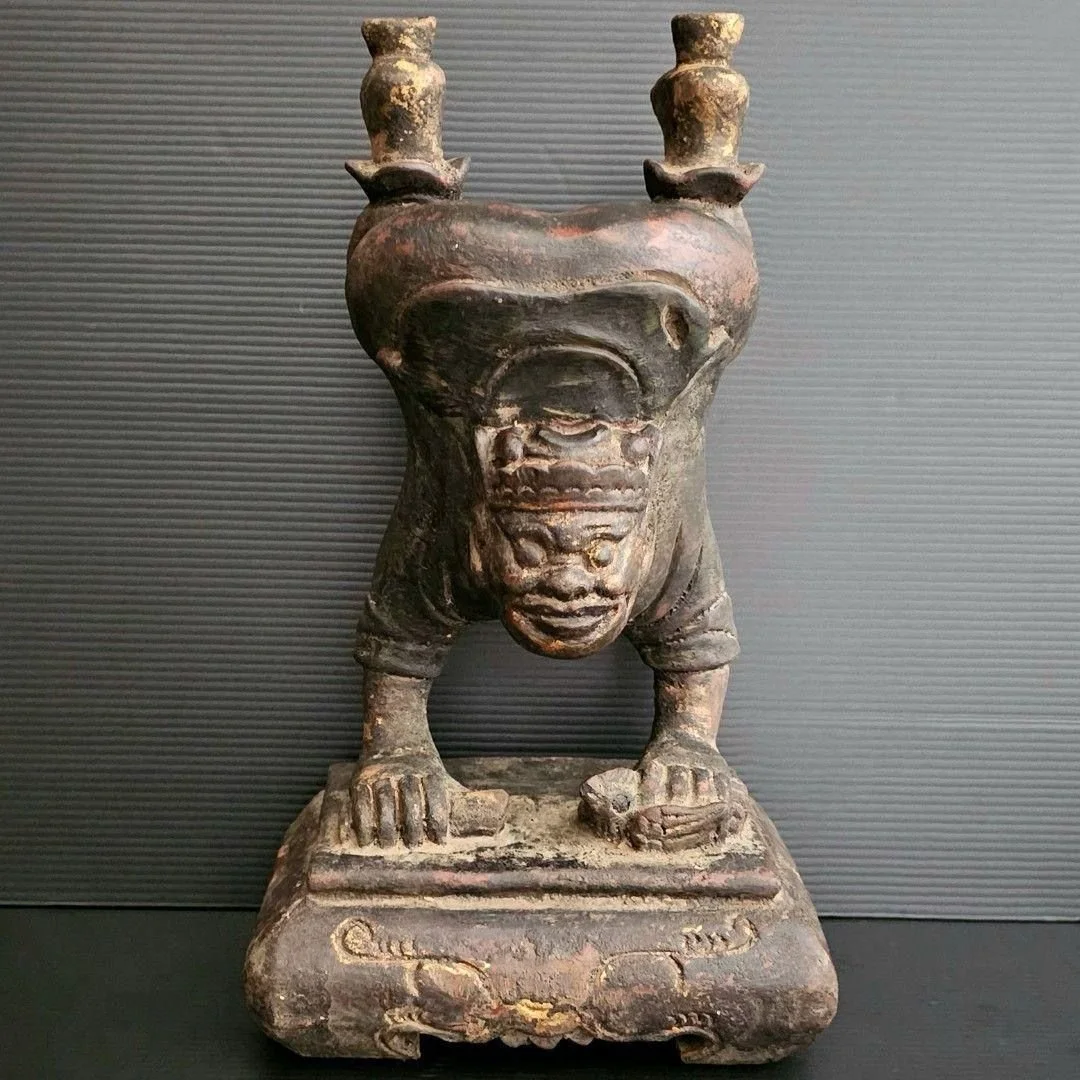
Zhang Wulang deity statue. Collection of Ronni Pinsler
It seems that these Miao king prints were designed in the twentieth century by the traditional inheritor of the Gaolamei workshop, Zhong Haixin (钟海; 1928–2008). The figures are based on heroes of the Miao Uprising against the Qing government that took place in adjacent Guizhou province 1854–1873 and which is still widely remembered by minorities inhabiting the Hunan–Guizhou borderlands west of Tantou, where these prints remain popular.
The pictures don’t represent particular people, rather idealised warriors now incorporated into Meishan folk belief as guardian deities. As with Chinese door gods, they are pasted up on entrances to the home (or, according to one source, animal pens), protecting the inhabitants from evil spirits and misfortune.
Many thanks as always to my guru on Miao culture, Li Maoqing; Yin Dongxiang; and Ronni Pinsler at www.bookofxianshen.com