Printing at Puzhong Temple
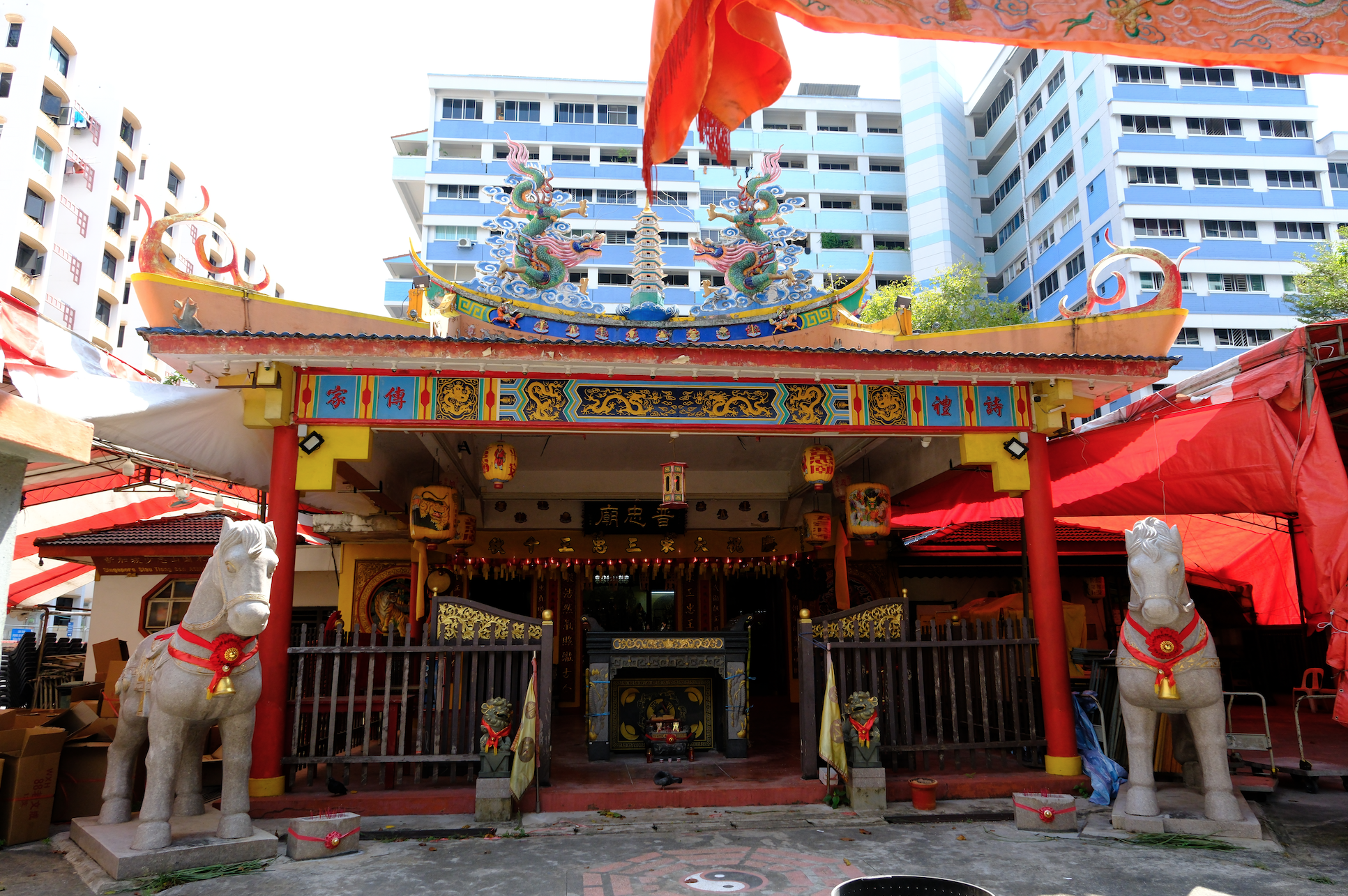
Puzhong with its guardian horses – able to spy trouble at a distance and rush back with a report
In January 2026 I visited the little Puzhong Temple (普忠廟), sunk amongst apartment buildings at 201 Lorong 6 Toa Payoh, Singapore. Puzhong’s caretaker Andy Yeo recenty found some old printing blocks in the temple’s storeroom, and invited me to watch prints being made by mutual friends Jimm Wong and Victor Yue.
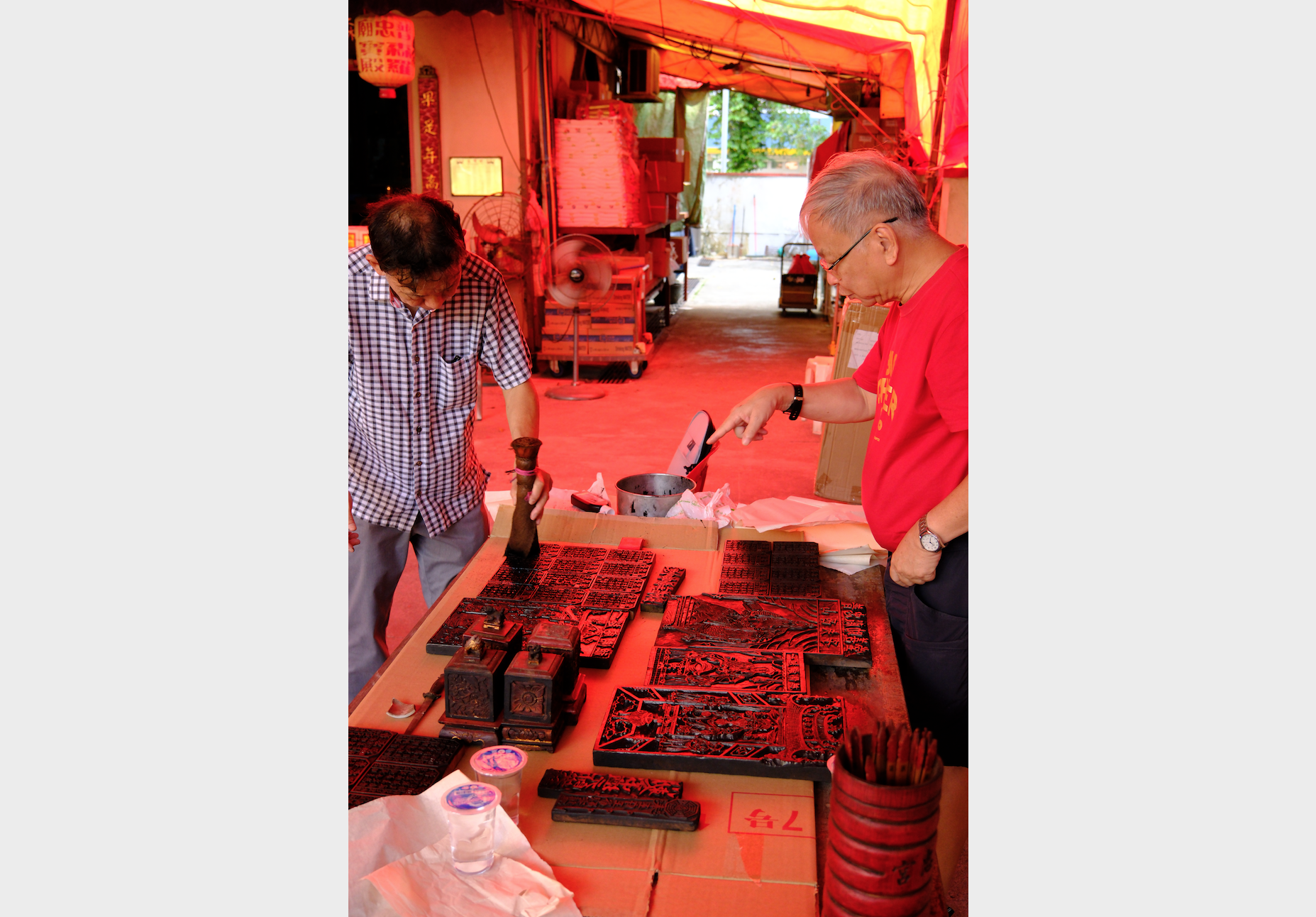
Jimm and Victor preparing the blocks for printing. The four boxes contain temple seals for stamping talismans (the long thin blocks in the foreground)
The temple was founded in the early twentieth century by members of the Chen clan from Tong’an, near Xiamen in China’s Fujian province (厦门市同安), as a place of worship for merchants and barge workers. The original site was a few hundred metres away, now buried under a housing development; the temple moved to its current location in 1971.
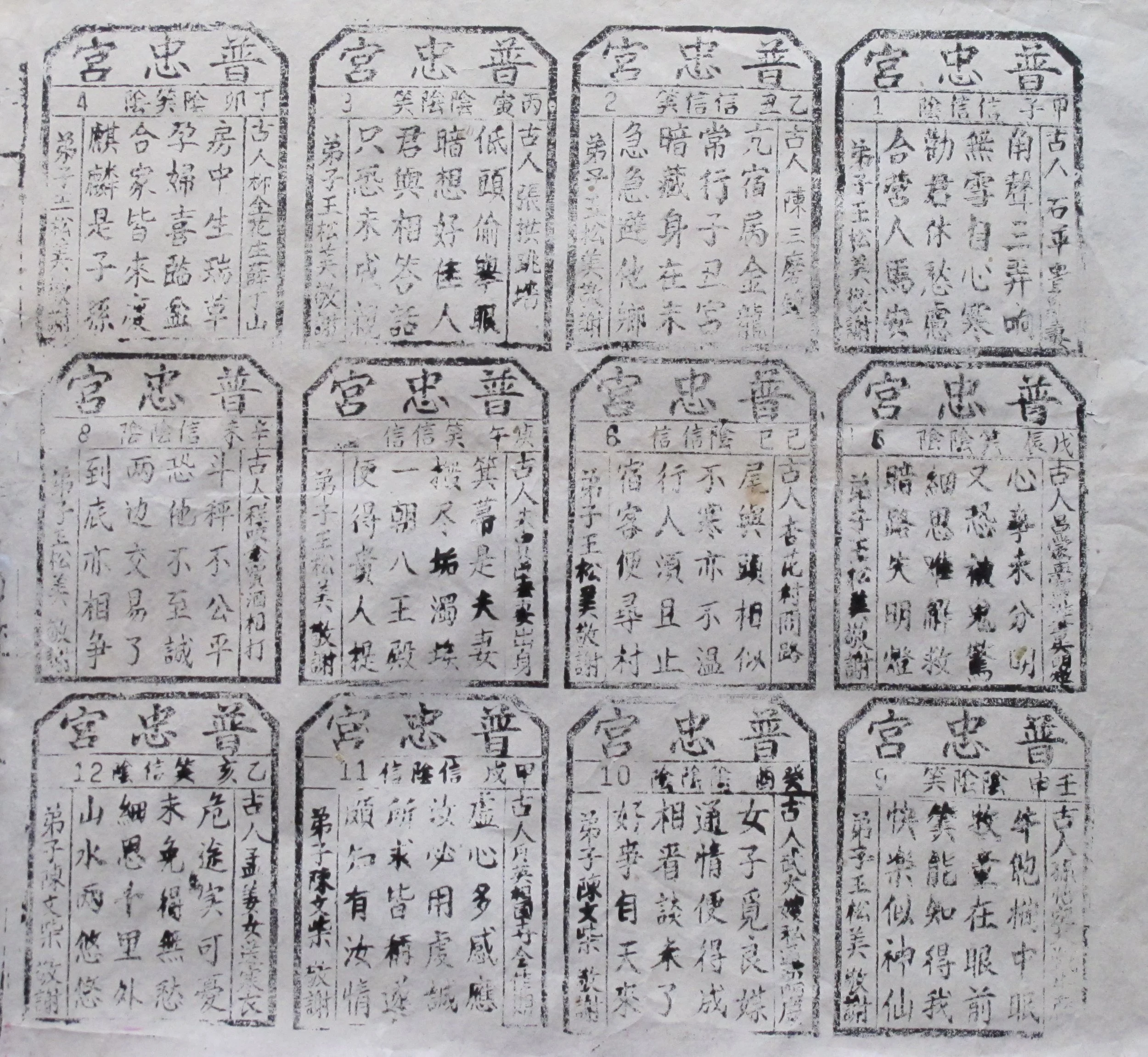
12 of 28 divination texts from the temple. As I understand it, Puzhong has 28 demons under its control. Those seeking advice from them can ask a medium, who will shake numbered divination sticks in a bamboo pot until one falls out. The stick’s number corresponds to one of these texts, written in obscure language which needs to be interpreted in light of the original question asked.
Puzhong is dedicated to the Three Loyal Kings of the Southern Song dynasty: chancellor and poet Wen Tianxiang (文天祥), chancellor Lu Xiufu (陆秀夫) and general Zhang Shijie (张世杰) – all “loyal” because after the Song capital Hangzhou fell to Mongol Yuan forces in 1276 and the last Song princes fled to Fujian and Guangdong, the three heroes continued to fight for the old dynasty until they and their armies were entirely destroyed. Strangely, only general Zhang Shijie actually has a statue at the temple.
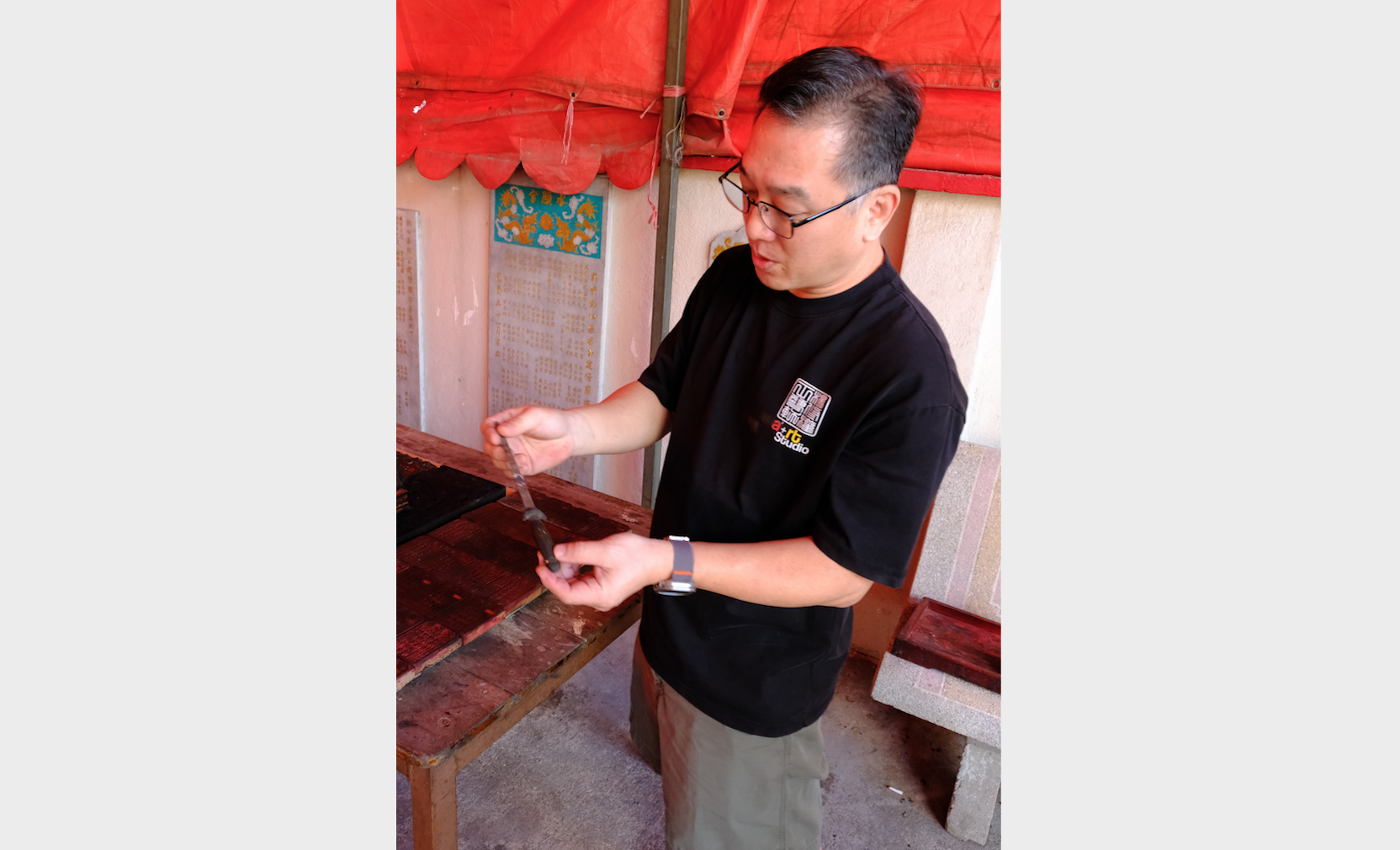
Caretaker Andy Yeo with miniature sword used to draw blood from a medium to mix with ink used for printing talismans. He says nowadays they prefer using a piece of broken porcelain.
At the time of Puzhong’s founding this tale of alien invaders being stoutly resisted by heroic native Chinese was popular with China’s wider population, resentful of the Manchus who had stormed through the Great Wall to found the foreign Qing dynasty in 1644. Clan-funded complexes like Puzhong functioned as meeting houses for anti-Manchu secret societies, and the temple is broadly laid out like a military camp, even with flagpole “watchtowers” and two stone horse sculptures guarding the front entrance.
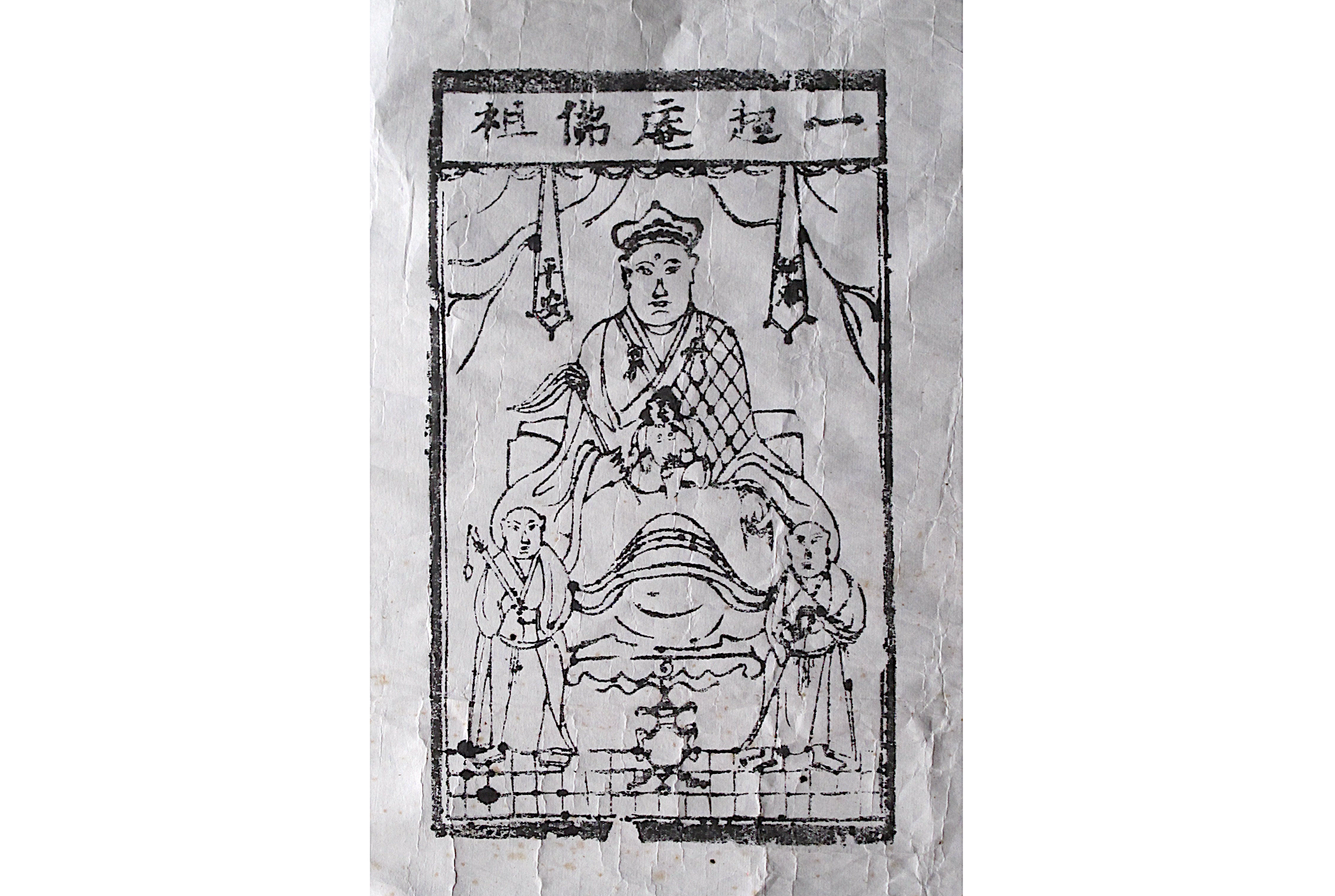
一超庵佛祖 Buddha of Yichao Temple - Pu’an
Other deities worshipped here include the Chan Buddhist patriarch Pu’an (普庵祖师) and the Prince of Qiu (邱府王爷), who back in Fujian are both associated with the Three Loyal Kings. The temple’s name is a combination of the “pu” of Pu’an and “zhong” (loyal).
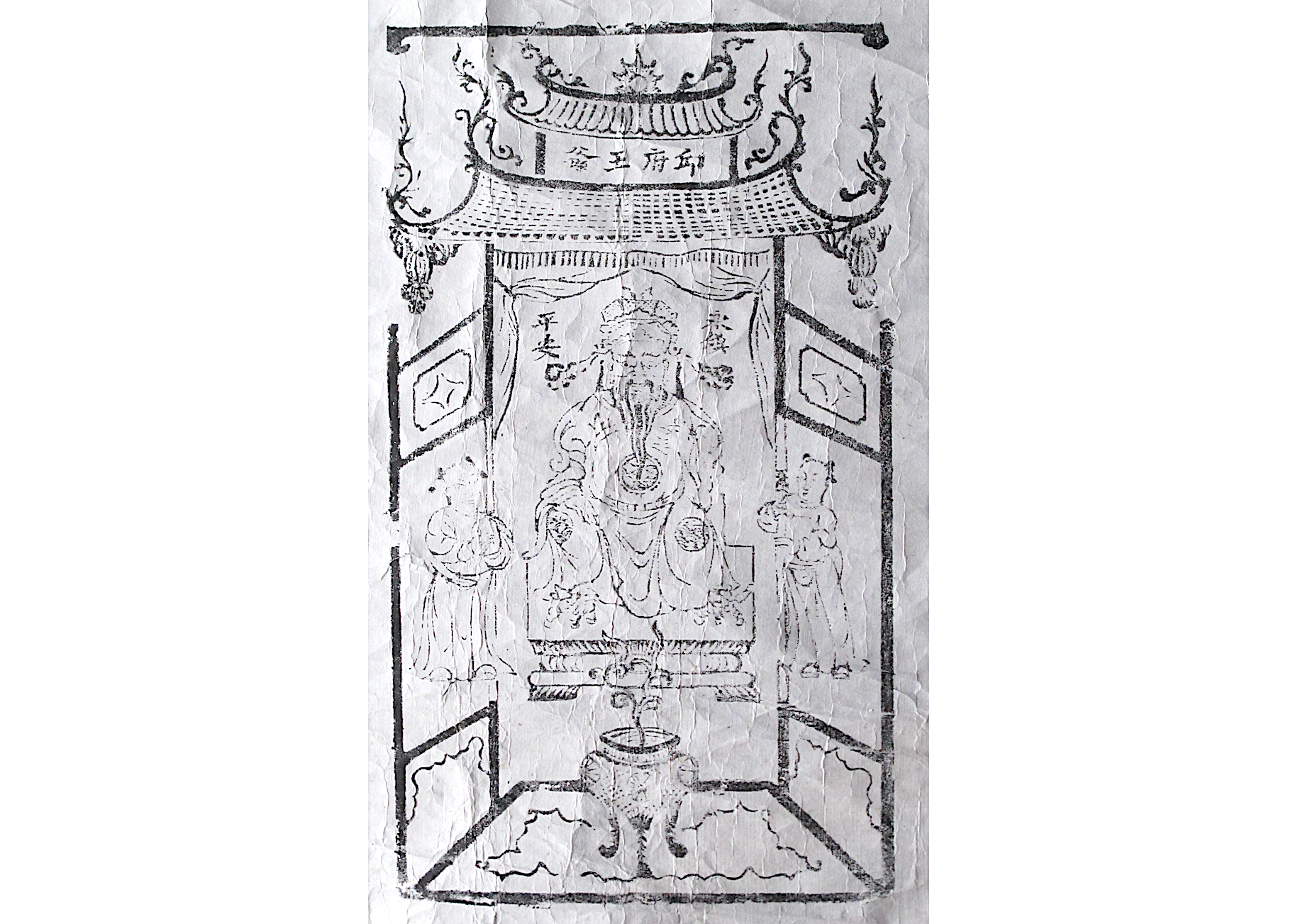
邱府王爷 Prince of Qiu. Little known about him, even at his home temple in Fujian
Massive thanks to Jimm Wong Pui Fatt, Victor Yue and Andy Yeo